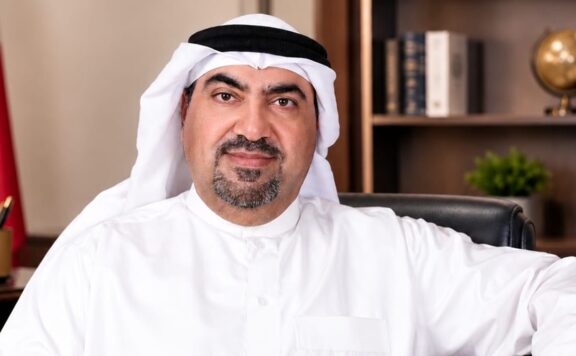


Alexander Khanin, Founder of Polynome Group and organiser of Machines Can Think, highlights that the event connects early-stage AI startups directly with global tech leaders, investors, and decision-makers, providing real-world validation, visibility, and clear pathways to scale within the UAE’s rapidly growing AI ecosystem.
How is Machines Can Think creating opportunities for startups to showcase their AI innovations to global tech leaders?
Machines Can Think was designed deliberately as a platform that keeps startups from being pushed to the sidelines, bringing them into the same rooms as the people who actually build, deploy, and fund real AI systems. The UAE’s broader AI ecosystem is evolving quickly, and the whole point of the summit is to ensure early-stage teams gain genuine visibility into that momentum. That means founders are sharing the programme with global technology companies and UAE organisations that already operate AI at scale — teams from Meta, Snap Inc., G42, Mubadala, and MBZUAI among them.
For startups, the benefit is immediate. When the speaker lineup includes practitioners like Michal Valko, Chief Models Officer at a stealth AI startup, who works at the frontier of model development, founders aren’t hearing abstract theories; they’re hearing exactly how real AI products are built, stress-tested, and commercialised. With more than 1,500 experts from over 30 countries attending, the summit becomes a place where investors, accelerators, enterprise buyers, and public-sector operators can spot emerging teams in a context that feels real, not hypothetical. Startups gain visibility in front of people who understand the work—and who have the authority to move it forward.
What support does the summit offer early‑stage founders looking to validate, scale, or commercialise AI‑driven products?
One of the biggest challenges early-stage founders face is getting their first real validation. Before investors or large enterprises take them seriously, they need references — customers who have actually used the product and can vouch for it. That’s the hardest part. When a startup approaches a company, the first question they hear is, “Who else is using your solution?” If they don’t have an answer, the conversation stops there.
Machines Can Think helps founders cross that barrier by creating an environment where these early connections can genuinely happen. The summit brings together investors, potential co-founders, technical talent, and, most importantly, companies that are actively exploring AI adoption. It’s a space where early-stage founders can have real conversations with people who may become their first customers or early adopters. That kind of interaction is often what transforms a prototype into a viable business.
The value of the summit is that it brings together the right people in the same room — decision-makers open to experimentation, teams searching for solutions, and founders ready to prove their technology works. When these conversations happen naturally, founders can walk away not just with interest but with actual pilots, reference use cases, or the beginnings of a customer relationship. For many startups, that first endorsement is the hardest milestone to reach. Machines Can Think is intentionally structured to make that moment more achievable.
The summit’s Startup Contest Day on Day 2 also encourages the founders, as it is also designed to test ideas under pressure. Twelve selected teams take the stage for fast, focused pitches, followed by direct questioning from an expert jury. Founders must clearly articulate the problem they are solving, why their technology matters, and where it fits in the market, all in front of investors and operators who know what works. The format creates intensity, clarity, and visibility in a short window, where the most valuable conversations often begin.
How is the event helping founders understand the infrastructure, data, and talent requirements needed to build AI‑native companies?
A lot of founders underestimate how complex it is to build a truly AI-native company, and that goes far beyond just training a model. They need to understand infrastructure, data governance, compute access, and the kind of talent required to run systems reliably at scale. Machines Can Think is designed to give them that clarity in the most direct way possible.
During both days of the summit, we bring in people who actually shape these ecosystems — government policymakers, infrastructure providers, and teams who operate large-scale AI systems every day. They explain how things work in practice: what regulations matter, how data can and cannot be processed, what it takes to run a national-scale compute, and how companies should think about hiring and technical capabilities from day one. It’s information that founders rarely get access to in such an open setting.
But the most valuable part is that nothing happens behind closed doors. We give startups full access to the speakers and experts. They can ask direct questions, challenge assumptions, and get real answers. The Q&A sessions are just the formal part, and the real magic happens in the coffee breaks, the lunches, and those informal moments where conversations go deeper. Our speakers don’t just show up, give a talk, and leave; they stay, they engage, and they spend time with the participants.
That proximity is what makes Machines Can Think different. Founders aren’t just listening to theory; they’re learning from the people who build, regulate, and operate the infrastructure that AI companies depend on. It’s a rare opportunity to understand what it truly takes to scale, long before they make decisions that are difficult or expensive to undo.
As AI adoption accelerates, how is Machines Can Think planning to expand its startup‑focused programs and engagement in future editions?
As AI adoption moves from experimentation to execution, we see a growing need for founder-centric support that extends beyond inspiration. That’s why future editions of Machines Can Think will deepen our commitment to startups in very intentional ways. One of the biggest priorities is showcasing real success stories from founders and partners who joined us in previous years. Their journeys involve securing early customers, raising investment, or scaling their technology across new markets. serve as powerful proof points for what this ecosystem can enable when the right connections are made.
Future editions of Machines Can Think will also deepen founder involvement through more structured pathways that connect pitching, technical learning, and commercial dialogue across the year. Startup-focused sessions will increasingly link founders with infrastructure providers, public-sector buyers, and enterprise partners earlier in the product lifecycle.
The aim is to create continuity rather than one-off moments. As the region’s AI economy is projected to reach US$320 billion, startups need repeated access to decision-makers who control data, compute, and long-term budgets. Machines Can Think is expanding its role as a convening platform where founders can return with stronger products, clearer positioning, and a deeper understanding of market realities. The summit is building a longer runway for emerging teams to move from early traction to durable, scalable businesses.