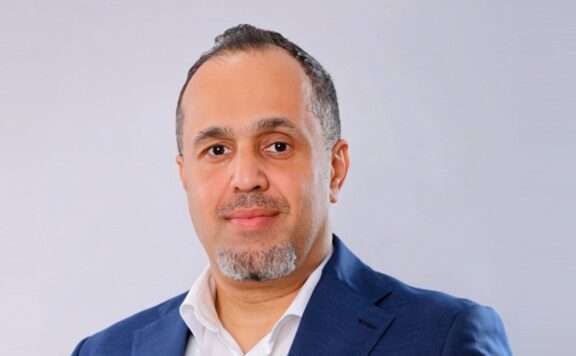

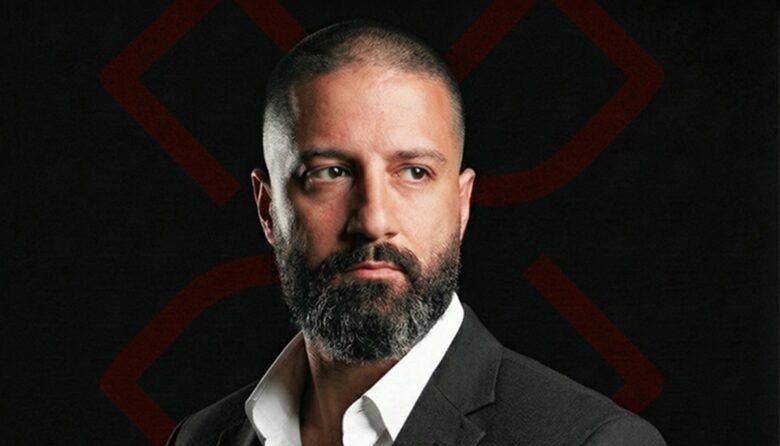
Jadd Elliot Dib, Founder & CEO of PangaeaX, says global on‑demand data talent is reshaping how organizations work. Instead of growing headcount, he argues the future lies in modular, capability‑based teams that assemble around outcomes and adapt as priorities shift.
In today’s data-driven world, businesses are increasingly recognizing the importance of data for organizational success. However, a paradox has emerged: companies have more data than ever, but they have less clarity on how to configure their workforce to make the most of their data. The reality is that the future of work is not about hiring more people, but about accessing the right capabilities at the right moment. This is less like staffing a factory and more like assembling a mission team: the right people, for the right outcomes, at the right time.
Running a global data workforce platform gives a front-row seat to how the “old rules” are breaking down. The largest change isn’t about remote work or new titles. It’s about how demand for expertise is changing at a pace faster than traditional hiring or workforce planning can reasonably keep up.
Why companies need flexible, project-based teams
In the data world, needs shift constantly. A company might spend months building a new data pipeline, then suddenly face an urgent governance challenge. Or it may be experimenting with machine learning, only to discover that model deployment and monitoring require a completely different skill set than model training. The demand curve is not linear but instead has valleys and troughs.
Despite that, many organizations still try to solve that variability with a permanent headcount. The results are predictable: either teams are overextended and under-resourced, or they’re overstaffed for a season and underutilized in the next. In both cases, resources are not used optimally and business momentum suffers.
Project-based teams are a better match for the reality of modern work because they align talent with outcomes, not org charts. When teams are formed around a defined objective (e.g. data quality improvement, forecasting, customer segmentation, AI readiness), they become more responsive to business priorities, not locked into a fixed set of responsibilities.
This isn’t about replacing full-time employees. It’s about acknowledging that much of the highest-value work today is episodic, specialized, and time-bound. And companies need workforce models that reflect that.
How modular talent models improve speed and resilience
The most effective organizations aren’t merely “flexible.” They are modular. A modular talent model treats expertise like building blocks. You assemble what you need, when you need it, and redesign the system as new needs emerge. This is especially powerful in data, where a single initiative may require a data engineer, a cloud architect, an analytics translator, a visualization specialist, and a domain expert. These roles can last for weeks or months, but rarely forever. The focus should shift from headcount to capability on demand.
Modularity does two things exceptionally well: It increases speed and creates resilience. Traditional hiring is slow, even when leaders are moving fast. By the time a role is approved, scoped, posted, interviewed, negotiated, and onboarded, the business need may have changed. Modular teams shorten the time needed to reconfigure teams.
Regarding resilience, it used to mean having backup systems. Now, it also means having backup expertise. When talent is modular, companies can adapt when priorities shift, budgets tighten, or new technologies emerge. Modular workforce models reduce bottlenecks and distribute capability across a broader, more dynamic network.
What leaders must unlearn about workforce planning
To adopt this new reality, leaders will need to unlearn a few deeply embedded assumptions. These are:
1. Control comes from keeping everything in-house
Many leaders believe control equals ownership: if the people are employees, the work is safer, higher quality, and easier to manage. But control actually comes from clear outcomes, strong governance, good process, and transparency. The best blended teams outperform traditional teams because they’re designed around accountability and results, not employment type.
2. Planning means predicting
Workforce planning has historically been an exercise in prediction: forecasting roles and headcount needs 12–18 months out. But prediction fails when the environment changes monthly. The future belongs to planning as a capability: building systems that allow fast reconfiguration, repeatable onboarding, and rapid team formation.
3. Quality requires permanence
Quality requires standards, not permanence. If the system is designed for excellence, great work will come from full-time employees, independent specialists, or blended teams. That means shared frameworks, rigorous documentation, well-defined deliverables, and strong leadership. The model doesn’t guarantee success. The operating system does.
The changing relationship between people and work
Today, we are seeing shifts from job structures to capability systems, from headcount to impact, and from static planning to dynamic orchestration. These aren’t only happening because companies want them. There is also demand from the talent side. Many skilled professionals increasingly prioritize autonomy, meaningful projects, and continuous learning over traditional career ladders. They want the ability to work across industries, solve hard problems, and build a portfolio of impact instead of a flashy job title.
Building access to opportunity in a way that’s transparent and outcome-driven will unlock a more meritocratic market. The best person for the job can be anywhere in the world. And, by reliably connecting that person to the problem, everyone wins – organizations move faster, and experts can work on what they do best.
Leaders who embrace this won’t just adapt to the nature of work. They’ll shape it.