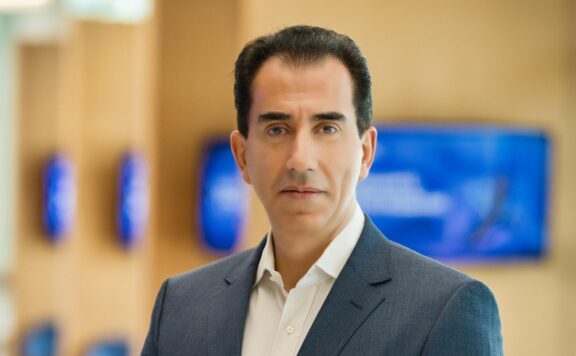


Ema Fulga, AI Search Optimisation Specialist & Founder of ‘decipher’, explains that SMEs can regain control in uncertain times by using Generative Engine Optimisation, structuring content for AI, earning external mentions, and strengthening local visibility to stay discoverable.
There is a common assumption that SMEs suffer most during periods of instability. And, of course, the pressures are real. Like limited cashflow, leaner teams, and smaller customer bases that can feel fragile when confidence is low. But all is not lost. In fact, SMEs can be extremely resilient during a downturn, arguably more so than larger organisations. That’s because they can usually move faster, adapt more easily, and make decisions without layers of bureaucracy slowing them down.
The truth is that UAE businesses of all sizes are grappling with a loss of control right now. As an SME founder, the most useful question you can ask yourself is not what’s happening out there, but what you can directly influence from within.
One of the most powerful answers to that question is your online content, which brings us to the topic of Generative Engine Optimisation (GEO), also known as AI Search Optimisation. GEO is the art of getting your brand recommended in AI-powered searches, where ChatGPT accounts for 20% of search-related traffic worldwide. Other AI tools like Claude and Perplexity have seen rapid adoption, with usage growing multiple times year-on-year.
Plus, the overall scale of AI search is larger than most people think. According to recent data, monthly AI sessions now represent 56% of total global search volume, and 34% in the United States alone. That is four to five times higher than earlier figures, which only tracked web-based data not accounting for mobile and app usage.
Where Search Engine Optimisation (SEO) optimises for ranking signals, like keywords, backlinks, and page speed, GEO optimises for trustworthiness signals. These are the structural, factual, and contextual cues that AI models use to decide which sources are authoritative enough to recommend in a generated answer. The difference is significant for SMEs, because you can maximise GEO yourself without big advertising budgets.
Here are four practical steps to help your business maintain visibility and be discovered online in a challenging climate and beyond.
Structure your content so AI can extract answers rather than just read it
AI systems pull answers in chunks, which means your content needs to be broken into short, focused sections, each answering a single question in roughly 75–300 words. Each section should deliver standalone value.
A straightforward way to do this is to add an FAQ section to every main page on your site – your homepage, services page, and about page, at minimum. Make the questions specific to what your customers actually ask. Add FAQ schema mark-up so AI systems can interpret your content clearly, and keep FAQs prominent and up to date. This one small change delivers a disproportionate share of AI citation gains relative to the effort it takes.
Build content around questions, not topics
Think about your website’s navigation menu: Home, Services, About Us. That structure is fine for getting around, but when someone lands on one of those pages, the heading should not simply mirror the menu label.
For example, if you run an accounting firm, a GEO-optimised title for your services page might be: “What does an accounting firm actually do?” Because that’s what people ask and the page then answers it directly with a detailed description of your services and how it helps people. The same logic applies for any business. Run an audit with AI brand visibility tools like Spotlight (get-spotlight.com) or Searchable.com to understand which prompts people are using in your space, and build headers around them where appropriate.
Get your business mentioned beyond your own website
From an AI’s perspective, a business that exists only on its own website has not been validated by anyone else, and that is a problem for credibility. AI systems build trust from multiple independent sources, which means earning mentions and coverage elsewhere on the web matters, even when those mentions do not include a direct backlink.
For UAE SMEs, this means being listed on local business directories and industry association pages, securing coverage in top-tier regional media outlets, and publishing LinkedIn content that earns genuine engagement. Each of these touchpoints is a signal to AI systems that your business is real, active, and worth recommending.
Optimise your Google Business Profile
The future of search in the UAE is increasingly local, with consumers using location-specific queries in both English and Arabic. A fully optimised Google Business Profile is no longer optional. AI Overviews now draw heavily on local business data for location-intent searches, and many SMEs have profiles that are incomplete, unverified, or simply out of date.
This matters more than most founders realise. When someone searches “best accountant in Dubai” or “top logistics company in Abu Dhabi,” AI overviews rely heavily on Google’s own ecosystem to generate their answer. If your profile is not in order, you may not appear at all, regardless of how good your website content is.