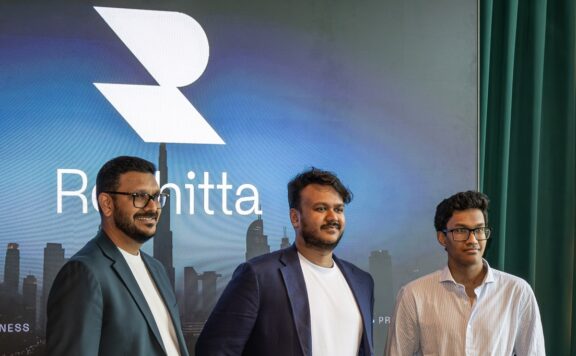

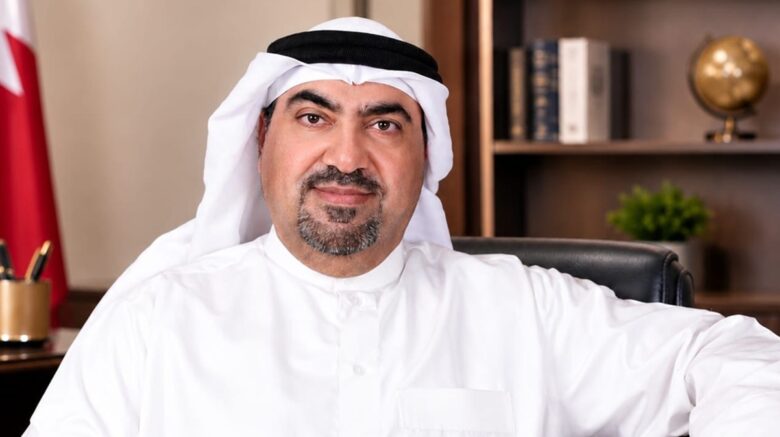
Hesham Mohamed J., CEO of Graystone Capital, underscores that the firm provides non‑dilutive, well‑structured financing to revenue‑generating startups, enabling founders to pursue disciplined, cash‑flow‑backed growth rather than equity dilution. He adds that Graystone’s clean, underwritable facilities strengthen regional credibility and support founders ready to scale responsibly.
How does Graystone Capital assess the current startup landscape in the Middle East, and which sectors do you believe are entering their strongest growth phase?
2025 was a record year for the region by most measures, MENA startups raised a combined $7.5 billion across roughly 650 companies, a 225% jump on the year before, and cities like Dubai, Riyadh and Abu Dhabi have moved into the top tier of Startup Genome’s global ecosystem rankings. But 2026 has told a more interesting story than the headline number suggests. Monthly funding has swung sharply, from under $50 million in March to over $300 million in February and back down again through the summer, which isn’t a sign of a market losing confidence so much as one becoming genuinely selective. Capital is concentrating on startups with real fundamentals and sustainable revenue rather than chasing growth-at-any-cost stories, and debt has been doing a much larger share of the work than it used to, accounting for well over half of total MENA funding in some recent months.
Against that backdrop, fintech remains the clear leader and has stayed the most consistently funded sector through 2026. Healthtech and medtech continue to attract serious capital on the back of post-pandemic demand and population growth; edtech is holding up well, particularly Arabic-language and hybrid learning platforms; and climate-resilient agritech has seen a genuine surge in investor interest. B2B businesses more broadly are proving resilient in a market that’s grown more discerning about consumer-facing plays.
What structural or regulatory shifts across the GCC — especially in the UAE and Saudi Arabia — are creating the most compelling opportunities for early-stage and growth-stage startups?
The most consequential shifts aren’t the ones that get the most attention. Golden Visa reform is the headline-grabber, and the UAE’s 2026 update is genuinely meaningful, entrepreneurs are now assessed partly on innovation signals like patents or accelerator backing rather than balance-sheet size alone, but the deeper change is that both the UAE and Saudi Arabia are simultaneously rebuilding the entry and exit ends of the startup lifecycle at the same time.
On entry, Saudi Arabia’s new Investment Law, in force since February 2025, replaced the old MISA licensing system with a largely digital process and made 100% foreign ownership the default across most sectors, while the Capital Market Authority has streamlined licensing for VC fund managers. The UAE has paired its 9% corporate tax regime with an “FDI 2.0” push built around talent mobility and a maturing Open Banking Framework that’s been a genuine catalyst for fintech. On exit, which the region has historically lacked, Saudi Arabia’s CMA has introduced new listing rules for tech companies with reduced profitability requirements, and the UAE launched the ADX Growth Market with a streamlined path to listing. A region that builds an easier path in and a credible path out at the same time changes the entire risk calculus for growth-stage capital, not just the early-stage numbers everyone quotes.
Which types of startups does Graystone Capital prioritise, and what core criteria define your investment thesis in the region?
We’re not a venture fund, so we’re not chasing the same profile a VC would be. Our role is to structure and arrange growth and working capital for startups that have moved past the pure concept stage and are generating real, contracted or recurring revenue, the kind of company that could raise another equity round if it wanted to, but would rather not dilute further to fund a stage of growth it can already see coming.
The core criteria we look for are consistent: a demonstrable, recurring or contracted revenue base rather than projections; unit economics that hold up, or improve, as the business scales; and a sector where we can genuinely underwrite the cash flow. Fintech-adjacent platforms, SME-facing digital services, and tech-enabled service businesses tend to fit that profile well. Pre-revenue, pure R&D-stage companies are better served by angel or venture capital, and we’re upfront about that; we tend to become useful to a founder once there’s a real receivable or a real contract to structure a facility around.
How do you evaluate founder readiness, product-market fit, and scalability when selecting startups to support in emerging Middle East markets?
Founder readiness, for us, shows up less in pitch quality and more in financial discipline, can the team produce clean, reconciled financials, do they understand their own cash conversion cycle, and have they run the business with the kind of rigor that makes a facility easy to structure and monitor. A strong pitch doesn’t tell us much; a founder who already tracks their receivables ageing tells us a lot.
For product-market fit, we look past growth metrics that are easy to buy, like user acquisition, toward evidence that’s harder to manufacture: contract renewals, repeat customers, and revenue that holds up without escalating discounting or subsidy. Scalability comes down to whether unit economics improve or at least hold steady at higher volume, and whether the business can expand into a second market, Saudi Arabia after the UAE, for instance, without having to rebuild its go-to-market model from scratch. A company that’s proven it can do that once is a much safer bet to do it again.
What role does Graystone Capital play beyond capital — in terms of mentorship, market access, operational support, or ecosystem partnerships?
We’re honest with founders that we’re not an accelerator, and we don’t claim to offer the office space, structured mentorship programs, or hands-on operational involvement that a good accelerator or venture studio provides. Where we do add real value is in the capital-structuring relationship itself: matching a startup with the right lender or capital partner for its stage and cash flow profile out of our network of banks, private credit funds and regulated fintech lenders, and staying involved through execution rather than handing off after an introduction.
That network also opens doors beyond the immediate facility. We’ve made strategic introductions for clients to potential acquirers and investors when the timing and fit were right, and because we work across sectors and markets, we’re often able to connect a growth-stage founder to a bank or partner they wouldn’t have found on their own. It’s a narrower kind of support than a full ecosystem platform offers, but it’s support we can genuinely stand behind because we stay in the deal.
How is Graystone Capital planning to expand its footprint across the Middle East’s startup ecosystem, and which markets or verticals are central to your next phase of growth?
Oman is our most active expansion market right now, and we see a real gap there similar to what we found in the UAE early on: a growing base of SMEs and growth-stage businesses with limited access to structured working capital. Saudi Arabia is the market we’re building toward next, given its scale, its regulatory momentum on both company formation and public listings, and the fact that it’s consistently led MENA funding activity through 2026.
On verticals, we’re staying close to what we already understand well: fintech-adjacent platforms and SME-facing digital services with recurring or contracted revenue. We’re also watching healthtech and edtech with interest, given the regulatory tailwinds and funding momentum both sectors have shown this year, and because both tend to produce predictable, contract-based revenue that fits how we structure facilities.
With global capital flows shifting, how is Graystone Capital positioning itself to attract international investors while strengthening regional innovation and entrepreneurship?
International capital is already flowing into the region at scale, but increasingly through sovereign co-investment structures. Funds like Saudi Arabia’s PIF, Abu Dhabi’s Mubadala, and ADQ don’t just provide capital themselves; they remove a layer of political risk that makes global investors more comfortable deploying alongside them. That’s part of why international names have followed into MENA’s marquee rounds in growing numbers. At the same time, as equity funding has become more selective through 2026, debt and structured capital have taken up a much larger share of total funding than in previous years, suggesting where global capital is actually finding it easier to get comfortable right now.
We see our role less as attracting international investors directly, and more as being the kind of well-documented, properly structured counterpart that makes it easier for that capital, whether it’s a regional bank, an international private credit fund, or a fintech lender, to deploy into growth-stage Middle East companies with confidence. Every facility we structure cleanly is, in a small way, evidence to the next lender that this region’s growth-stage businesses are financeable on credit terms, not just equity ones. That’s a slower way to build regional credibility than announcing a headline-grabbing fund, but we think it’s a more durable one.